Is there an age or year of your life you would re-live?
This question deserves a layered answer. Let’s start by exploring the weight of regret, and the longing to return to a time when we think things might have gone differently. I’ve often asked myself if I’d ever want to relive a certain year or moment—but truthfully, I wouldn’t. Every experience, even the painful ones, has shaped who I am and guided the choices that led me here.
From as far back as I can remember, my life wasn’t filled with the kind of happy or cherished memories that people often hold onto. And while I won’t go into the reasons why, I’ve come to accept that my past unfolded exactly as it needed to. Each moment, no matter how difficult, built the person standing here today. Change even one of them, and I wouldn’t be me.
So rather than clinging to old wounds or replaying what could have been, I choose to be grateful for my resilience—for the fact that I’ve made it this far. Don’t dwell on what you wish you could change; instead, honor the path that brought you here. Live in the now, and let your past become the foundation for a future that feels truly worth living.
In choosing not to dwell on what was, I’ve learned to gain from what is—and that’s how forward thinking begins.
My favorite form of physical exercise isn’t tied to a gym membership — it’s built into my everyday routine. Carrying groceries up the stairs, walking everywhere because I don’t have a car, and turning chores into movements with music.
Honestly, there are days I’m too exhausted to move, but I’ve learned that when I do — even just stretching before bed and again when I wake — it keeps me mobile enough to carry that basket of laundry from the basement to the attic without breaking down.
On days I can’t walk to the store or around the block, I hop on my stationary bike, which even helps improve my dance moves in the kitchen as I cook. Basically, as long as my body is in motion, my energy levels stay up.
Two years ago, I was diagnosed with Type II diabetes — but thanks to major lifestyle changes, I’ve been off insulin for about ten months now. Life’s workout plan costs nothing and builds strength where it counts.
Welcome to Cash Strapped Courage, where we turn limited resources into lasting resilience. This space is built for those learning to do more with less — through mindful spending, smart grocery strategies, and everyday courage in the face of financial pressure.
Your support allows me to keep creating honest, useful, and empowering content for people working to build stability, one choice at a time.
Subscription Tiers
Free Subscribers
Access to public posts, budgeting tips, and resource links. Occasional updates, practical challenges, and community highlights. Perfect for anyone starting their journey toward financial confidence.
Paid Subscribers
Early access to new articles and premium guides before they’re released to the public. Exclusive tools, printables, and deeper dives into topics like grocery planning, saving strategies, and sustainable living on a tight budget. A direct role in sustaining Cash Strapped Courage so it can remain an accessible, reliable resource for everyone.
Note: Some premium posts are offered to paid subscribers first and later unlocked for all readers. Your early access helps keep this project running and ensures that quality financial wellness content stays available to those who need it most.
Why Your Support Matters
Every subscription — free or paid — strengthens this community. It means more research-backed guides, more tested budget systems, and more conversations about financial resilience that don’t rely on shame or unrealistic advice.
If you’ve found value here, consider becoming a paid subscriber. Your contribution helps keep Cash Strapped Courage growing, grounded, and genuinely useful to real people.
I’ve always been very curious about different methods to earn money online from home—especially creative gigs that don’t require a big upfront cost. Over the past year, I’ve tried a few of the most popular ones: blogging on WordPress, setting up a Fiverr account, and experimenting with Canva to make digital content. Some things worked, some didn’t, but every attempt taught me something valuable.
What I Learned from My Gigs: Successes and Failures
Subscribe to continue reading
Subscribe to get access to the rest of this post and other subscriber-only content.
Many people following the news are aware that the current administration is aggressively pursuing its agenda, which includes targeting “the enemy within,” specifically Democrats. This ongoing confrontation has created a polarized political climate, making it even more crucial for citizens to remain vigilant. It’s important not to let the Twitter feud between two female rappers distract us from demanding the release of important files that could shed light on these contentious issues. With the ongoing issues of school shootings and church attacks, it can be challenging to keep up with crucial information that is often overshadowed by propaganda and mocking tweets directed at key political figures, further complicating public discourse.
Additionally, we shouldn’t overlook the CK controversy and the resulting attacks on HBCUs across the country by his supporters, as these incidents reflect deeper societal issues that call for our attention and action. As we navigate this tumultuous landscape, it is imperative to prioritize the vital topics that affect us all and work collectively towards a more informed and engaged society.
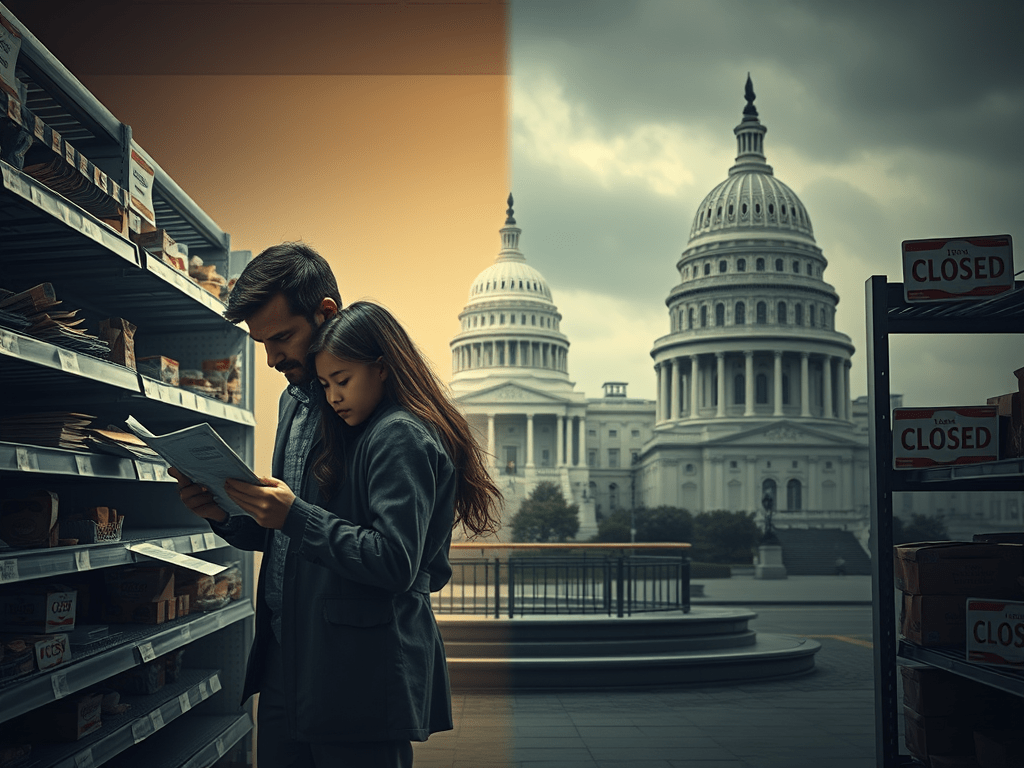
While the shutdown is in effect, many federal programs will suffer, such as WIC (which only has about a week of reserve funds left before it’s crippled) and SNAP benefits, both of which play a crucial role in supporting low-income families across the nation. These programs are vital lifelines for many households struggling to put food on the table and provide basic nutrition to their children. Since the executive order (Big Beautiful Bill) has been signed, many have already lost access to this essential service, leading to increased anxiety and uncertainty within vulnerable communities.
By early 2028, it is estimated that the program will be eradicated entirely, and millions of families will suffer as a consequence, with the blame squarely falling on the president’s shoulders. This dire situation underscores the ramifications of political decisions made at the top.
As they go on the WS news stations and blame the other side for the crisis, it becomes increasingly apparent that they have control of the majority of the Senate, and the Congress is Republican-led, leaving many to question the sincerity of their attempts to address the pressing issues facing American families.
The reality of the situation reveals a troubling disconnect between political rhetoric and the lived experiences of those who rely on these crucial assistance programs for survival.
This isn’t the first time they’ve essentially hurt the American public for their own gain. In fact, since 1976, there have been over 20 shutdowns, each one a vivid reminder of how political conflicts can disrupt the lives of everyday citizens.
The previous shutdown occurred in 2018 during Trump’s first term, clearly demonstrating a pattern of governance where partisan disagreements take precedence over the needs of the people.
Ironically, the very person who now speaks on these matters seems to conveniently forget his own previous assertions—like when he claimed that “…a Government shutdown is entirely the fault of the president… Failed to bring the people together.” I’m paraphrasing, but that’s the gist of his commentary, and it highlights a troubling tendency among politicians to shift blame while failing to take responsibility for the consequences of their actions.
The impact of these shutdowns extends beyond just government workers; families and businesses feel the ripple effects, leading to uncertainty and financial strain, thus showcasing the urgent need for leaders who will prioritize the common good over political posturing.
Longest Shutdowns
December 2018 – January 2019 (34 days)
December 1995 – January 1996 (21 days)
The silence inside these offices speaks louder than any debate — when service stops, trust erodes.
Most Notable Shutdowns
Ongoing 2025 shutdown
Duration: Began October 1, 2025
Cause: Failure to pass funding for the fiscal year of 2026 by the deadline of October 1st, 2025
Impact: About 750,000 federal workers are currently furloughed, with roughly 2 million more working without pay, including air traffic controllers and TSA officers. The Aerospace Industries Association warned that the shutdown would disrupt programs at the FAA, NASA, and the Pentagon.
2018-2019 shutdown
Duration: 34 days, from December 22, 2018, to January 25, 2019 (making it the longest one in history)
Cause: A standoff between the President and Congress over funding the wall on the U.S.-Mexico border.
Impact: The partial shutdown affected hundreds of thousands of federal employees and cost the economy an estimated $11 billion.
2013 shutdown
Duration: 16 days, from October 1 – October 17, 2013
Cause: A conflict over funding for the Affordable Care Act, with Republicans attempting to defund the program.
1995-1996 shutdown
Duration: The federal government shut down twice, with the second closure lasting 21 days, from December 15, 1995, to January 6, 1996.
Cause: Disagreements over a balanced budget between then-President Bill Clinton and a Republican-led Congress
Impact: Roughly 284,000 federal workers were furloughed.
Major company and retail shutdowns in 2025
1. Joann Fabrics
What happened: The craft retailer announced it would close all remaining U.S. stores by the end of May 2025, following its second bankruptcy filing in under a year. The chains struggled with financial difficulties and increased competition.
The parent company filed for Chapter 11 bankruptcy back in February 2025, leading to the closure of all U.S. stores. They blamed inflation, high interest rates, and competition from fast fashion retailers.
3. Party City
With all locations closing following bankruptcy proceedings due to inflation and shifting consumer spending habits contributed to the company’s financial struggles.
Other significant retail closures
Several other retailers announced store closures throughout 2025:
Macy’s
Closing 66 stores in 2025 as part of a larger plan to shutter 150 locations by 2026.
Walgreens
On track to close 450 locations through the end of 2025, with a goal of 1,200 closures by 2027.
Family Dollar
Closing 370 stores in 2025.
JCPenney
Closing several locations by mid-2025.
Best Buy
Closing several stores in 2025 as the retailer adjusts its focus.
Impact of Government Shutdowns
Suspension of services: Non-essential government operations are put on hold, leading to the closure of national parks and museums. These areas had already faced disruptions earlier this year due to mass layoffs and cuts to other programs.
Economic effects: Previous shutdowns have led to a noticeable slowdown in GDP growth.
Reduced public trust: Research shows that using shutdowns as a tool for control erodes public trust in government and elected officials. Ultimately, citizens don’t care who’s to blame—they care that they’re the ones suffering while those hired to serve them fail to do their jobs.
`
This is just some of what I found through Google, but I also have firsthand experience living through several government shutdowns. They can be devastating for many families and individuals, leading to uncertainty and financial strain that can last for months.
Essential services may be disrupted, causing delays in federal funding for critical programs, including those that provide food assistance, healthcare, and other vital resources. While others feel little to no impact, it is important to recognize that the repercussions of these shutdowns often ripple through communities, affecting not just those who rely on government employment but also local businesses and service providers that depend on a stable economic environment.
The anxiety and stress that accompany such situations can take a toll on mental health, highlighting the need for greater awareness and preparedness when these political decisions come into play.
I honestly typed the first half of this during the first few days of the shutdown, but as I edit this today (Tuesday, October 21st), we are currently very deep into this unprecedented situation. The streets that were once bustling with life now seem eerily quiet, echoing the uncertainty that hangs in the air.
As I look around, it’s clear that the impact is felt by so many, and the anxiety has only intensified with time, not just for individuals but for families, communities, and entire industries. News reports seem to flood in daily, revealing harrowing statistics about unemployment and the plight of small businesses, each story highlighting personal struggles that reveal the human cost behind the numbers.
The way it’s looking, November will be an even more hellish month for millions of Americans, and the economy continues to falter under the weight of extended shutdowns and consumer hesitance. In this climate, I find myself wondering how we will all navigate through the challenges that lie ahead, contemplating the profound changes required to adapt to a world that feels drastically altered.
The psychological toll is heavy, leaving us questioning what the new normal will look like in the weeks and months to come, and whether we will emerge from this crisis stronger or further divided. Hope feels fragile, but it is within these moments of shared hardship that we find resilience, supporting each other through not just the trials of today but also in creating a more hopeful and unified tomorrow.
“The limits of tyrants are prescribed by the endurance of those whom they oppress.”
Frederick Douglass, speech on West India Emancipation, August 4, 1857
Disclaimer: The information in this article is for general informational purposes only and should not be construed as legal, financial, or professional advice.
In 2025, it seems like every day brings new stories about job cuts, companies downsizing, or entire positions being taken over by machines. Workers in various fields—from healthcare and trucking to farming and office jobs—are either disappearing or rapidly changing careers. We still don’t have all the data, so the complete picture isn’t clear yet. For many people, this year hasn’t just meant losing a paycheck; it has also felt like losing their sense of stability and identity.
I can still remember how it felt to experience that kind of loss. Years ago, I worked as a cashier. It wasn’t glamorous work, but it was steady, and I was able to support myself and my two-year-old child at the time. Although I was technically a homeless single mother, I was staying with a relative. I had a clear understanding of my schedule, knew my regular customers, and respected my boss. I appreciated the rhythm of my days; there was comfort in the routine, even when the lines wrapped around the store and my feet ached after an eight-hour shift at the register.
Then one day, it ended.
There wasn’t much explanation, just a conversation that left me with that hollow feeling in the pit of my stomach, a gnawing emptiness that echoed in the silence of my thoughts. I was replaceable, disposable, a mere cog in a relentless machine that boiled down human worth to mere productivity. The world didn’t stop because I wasn’t behind that counter anymore, but it tilted in a way that made me feel so small, as if my existence was merely a blip in a vast, unfeeling universe that continued to spin without regard for my plight.
It wasn’t just about the money—it was about the fact that I now had no place to live and a child to provide for, each day becoming a painful reminder of the precariousness of our situation, the constant worry gnawing at my bones like a vicious winter chill. It took a year to find another job. This grueling process chipped away at my already fragile self-esteem, each rejected application echoing in the caverns of doubt that had begun to form in my mind, making me question my abilities and worth.
When I finally secured a position, I left that one after several months due to workplace bullying; my health was declining on top of everything (I had major surgeries consecutively), each setback feeling like another weight pressing down on my shoulders. A relentless assault that threatened to crush my spirit.
Something had to change, I realized, as I sat in the quiet moments of despair, contemplating how to rebuild our lives from the ashes of my career while battling the shadows that threatened to consume me. I started by reaching out for programs that would help temporarily until I could get back on my feet, fueled by a determination that began to stir within me, a flicker of hope igniting in the darkness. I just recently got housing, and for that, I am grateful, feeling a sense of relief wash over me as I unpacked boxes and transformed those bare walls into a home, each item carefully placed like a piece of a puzzle fitting into a long-forgotten picture of stability. But I’ll never again be complacent; I know now that life can shift without warning, and I must remain vigilant. Always striving to create a better, more secure future for both myself and my child, nurturing that spark of resilience into a blazing fire of ambition and hope that will carry us forward into brighter tomorrows.
When I look at the stories of people losing work now, I can’t help but see echoes of that moment. The cashier role that once gave me a sense of job security is one of the very jobs being phased out by self-checkout machines and automation. And it’s not just retail. The fragility of traditional jobs has become impossible to ignore.
But here’s what I’ve learned since then: a job can be taken away, but skills stay with you. The more I invested in myself – learning new things, pushing into spaces where I could create and not just clock in – the less power those layoffs and cutbacks had over me.
That’s the part I want to emphasize today. Yes, jobs are being lost in 2025. Yes, the economy is unpredictable. So instead of clinging to traditional jobs and roles that are shrinking, we should shift our focus toward industries and skills that allow us to build something of our own.
Further training doesn’t just mean going to get another degree (and more debt) or collecting certificates that keep you tied to someone else’s payroll. Training in a trade could possibly open more opportunities for you to run your own service business. Picking up skills in areas like content creation, home repair, catering, design, or beauty services – industries where entrepreneurship is encouraged.
Losing my job felt like the end of the world since it was my first job, but then walking away from the second job that left me unhappy and unprotected empowered me and gave me my confidence back. It let me realize my worth, that I shouldn’t have to put up with rude coworkers (the manager once called me in to work, waited till I arrived just to send me back home). But I now see it as the start of a new perspective: the most secure work isn’t always the job someone else gives you. Sometimes, it’s the work you build and grow for yourself.
That doesn’t mean everyone has to suddenly become an entrepreneur overnight. For some, the idea of starting a business feels overwhelming, and that’s fair. But there’s a middle ground between being locked into unstable jobs and trying to launch the next big startup. It’s about building options.
Think of it this way: every new skill you pick up is another in your toolkit. And the more tools you have, the more doors you can open. Maybe today that means picking up a certification in digital marketing while you’re between jobs. Tomorrow, it might mean running social media for a local business, freelancing for clients online, or even launching your own e-commerce shop.
Perhaps your skills lean more toward hands-on experience. Learning a trade like home improvement, cosmetology, or even craftsmanship like painting or crocheting can be a first step towards something bigger than just “finding work.” The industries I just mentioned have the unique advantage of being both practical and entrepreneurial. Fix one sink, cut one head of hair, make one outfit from yarn – and suddenly word of mouth becomes your first marketing plan. What starts as a way to fill an income gap can grow into a business that sustains not only you but any future employees you gain down the line.
The truth is, stability doesn’t come from chasing jobs that are disappearing the quickest. It comes from leaning into abilities that you learn and skills that evolve with you, whether you’re working solo, freelancing, or scaling into something larger.
Moreover, in a world that is changing so rapidly, it’s essential to recognize that adaptability is a superpower. We often hear about the importance of soft skills, such as problem-solving, communication, and collaboration. These qualities are more important than ever, as they can determine your success in diverse environments. Continuous learning and flexibility can help you navigate the shifting job market more effectively. When you embody a mindset geared toward growth, you will find opportunities where others see obstacles.
While retraining requires effort, the rewards are truly valuable. The main benefit is freedom—the freedom to avoid the fear of losing another job due to cutbacks and large layoffs. When you become your own boss, you can take control of your future. What do bosses do? They create their own work schedules, determine how many hours they work, and decide how their business will grow.
If you’re one of the many people who have lost their jobs this year, or if you’re worried about being the next one, I want you to understand this: you are not powerless. You have more ability to shape your future than any employer could ever provide.
Losing my job as a cashier was a setback for me, but it also opened up new possibilities. When one door closes, another one opens. You just have to seize the opportunity and not let fear hold you back. This experience was truly challenging, but it taught me that I can adapt and build my own future.
In a year like this, the lesson is more important than ever. We find ourselves at a crossroads, where we can choose to be victims of our circumstances or the architects of our own destinies. Embrace uncertainty and view it as a blank canvas for your next chapter. Remember, no matter how daunting the journey may seem, taking the first step toward empowerment can transform your life in ways you never imagined.
Back in August, I did something completely unplanned: I bought a lamb leg and a handful of jalapeños. No plan, no recipe, just a vague hope that my grocery impulse might turn into a meal. As I wheeled my cart to the checkout, I thought, “Well… this is either going to be amazing or a disaster.”
For weeks, that lamb sat in my freezer, silently judging me every time I opened the fridge. Meanwhile, the jalapeños were slowly dwindling in the vegetable drawer, taunting me with their potential.
Fast forward to September. I finally decided it was time to turn this chaotic grocery impulse into dinner. I pulled out my phone and started browsing slow cooker recipes, trying to figure out what could transform my lonely lamb and spicy peppers into something edible. It turns out, a few extra ingredients—garlic, lime, honey, and fresh coriander—were all I needed. A quick last-minute Instacart order later, and my impromptu ingredients were complete.
The Magic Happens: Slow-Roasted Lamb Shoulder with Jalapeños and Lime
Here’s what I ended up making—a tender, citrusy, slightly spicy lamb shoulder that basically melts in your mouth.
Ingredients:
• 1 (3–4 lb) lamb shoulder
• 1/4 cup olive oil
• 3–4 cloves garlic, minced
• 2–3 jalapeños, finely chopped
• Zest and juice of 1 lime
• 1 tbsp honey
• 1/4 cup fresh coriander (cilantro), chopped
• 1 cup chicken or beef stock
• Salt and pepper to taste
Instructions:
1. Prepare the Marinade: Mix olive oil, garlic, jalapeños, lime zest and juice, honey, and chopped coriander in a bowl. Season with salt and pepper.
2. Marinate the Lamb: Coat the lamb shoulder thoroughly with the marinade. Cover and refrigerate for at least 2 hours (or overnight) to let the flavors soak in.
3. Preheat the Oven: Bring the lamb to room temperature while preheating your oven to 275°F (135°C).
4. Slow Roast: Place the lamb in a roasting pan, pour the stock around it, cover tightly with foil, and roast for 3–4 hours until tender.
5. Caramelize: Remove foil, raise the oven to 425°F (220°C), and roast 10–15 more minutes for a golden finish.
6. Serve: Let it rest for 10 minutes, then slice or pull apart. Sprinkle with extra coriander and a squeeze of lime.
The result? A dish that tastes like it belongs at a fancy dinner party, even though it all started as a random grocery impulse. The lamb was melt-in-your-mouth tender, the lime added a bright zing, and the jalapeño gave it just the right kick.
Takeaway:
Sometimes the best meals come from complete chaos—impulse buys, last-minute orders, and a willingness to experiment. So next time your grocery cart looks like a random collection of odds and ends, don’t panic—your kitchen might just surprise you.
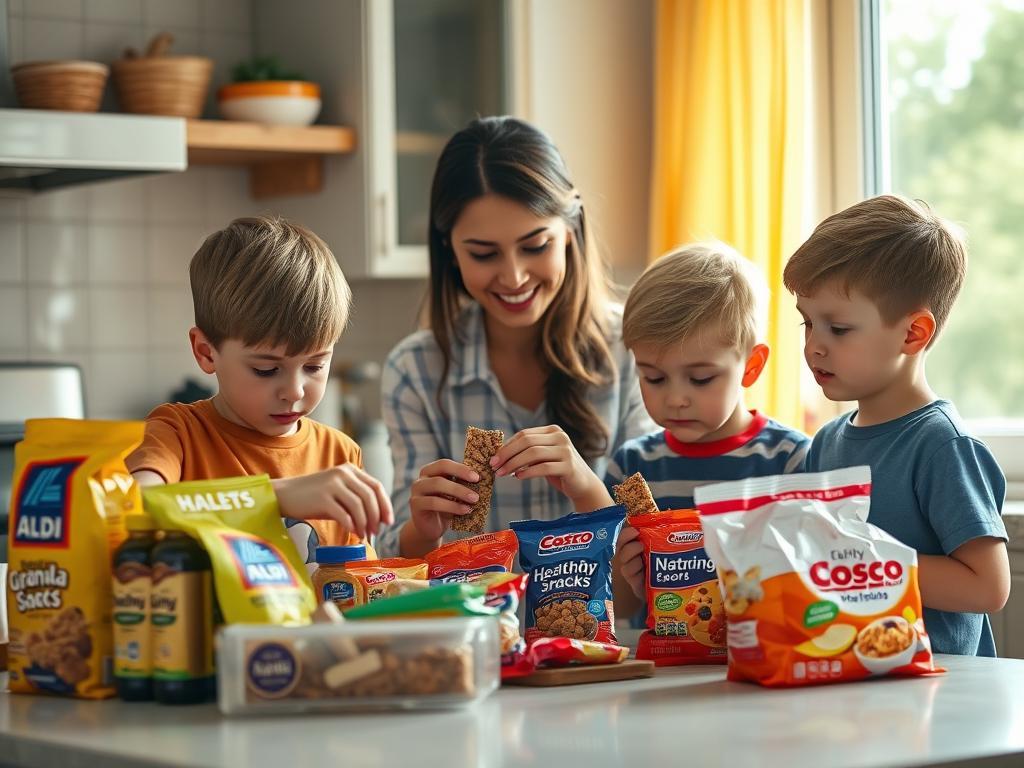
If you’d asked me at the start of August how I was going to stretch $522.93 to feed three kids who snack like they’re auditioning for a bottomless pit competition, I would’ve laughed nervously. But somehow, armed with a secret stash, rationing rules, and a few well-timed bulk purchases, I survived — mostly intact.
🍎 Snack Wars & Rationing
Mom Tax: the only law in this house nobody argues with.
Every snack purchase is divided equally among the kids and me, and my stash? Totally off-limits. My eldest is basically a rationing ninja; the middle and youngest… well, let’s just say participation counts. Occasionally, I let them “discover” a hidden treat — purely for morale, of course.
Field Observation: Surprisingly, snack rationing is easier than getting them out of bed for school. Go figure.
🛒 Grocery Strategy
The $522.93 isn’t planned — it’s just what is available at the moment. Rice, oatmeal, pasta, eggs, and bulk meatballs form the backbone of the month. Pre-tariff madness, I happened to have stocked up on bulk pasta, Cheez-Its, and fruit snacks on Amazon to stretch the budget and reduce last-minute trips.
Eggs are a cornerstone — scrambled, boiled, in sandwiches, omelets — affordable and versatile. Bulk meatballs pair with pasta for spaghetti or meatball subs, or they become quick appetizers. Everything is practical, flexible, and kid-friendly. Though I heard that many people were experiencing price gouging on eggs, I was shocked to find affordable eggs anywhere.
Expert Commentary (Mom Edition): Bulk purchases are the unsung heroes of family meal planning.
👩👧👦 Kid Interactions & Independence
Lunch and dinner are cooked by me about 4 days a week; the other three, the kids handle meals themselves. Snack time? Surprisingly peaceful. School mornings? Still chaos.
Special Report: Eldest rations like a pro. Middle and youngest… learning slowly. Hidden stash surprises keep morale high.
📝 Quick Reflections
Balance, independence, and resourcefulness are key. Humor helps — Mom Tax, stash surprises, and snack wars make it not just bearable, but fun.
Want to see the full month, complete with hilarious snack war details, full grocery strategies, and commentary on survival? The full story awaits in the subscriber version titled Behind the Rations — your front-row seat to August chaos.